1065 stories
·
0 followers

FDA does U-turn, will review Moderna's mRNA flu shot after shocking rejection

1 Share

The Food and Drug Administration has reversed its shocking refusal to consider Moderna's mRNA flu vaccine for approval.

The refusal was revealed last week in a sharply worded press release from Moderna. Subsequent reporting found that the decision was made by political appointee Vinay Prasad, the Trump administration's top vaccine regulator, who overruled a team of agency scientists and a top career official in rejecting Moderna's application.

In an announcement Wednesday morning, Moderna said the FDA has now agreed to review its vaccine after the company held a formal (Type A) meeting with the FDA and proposed a change to the regulatory pathways used in the application.

"We appreciate the FDA's engagement in a constructive Type A meeting and its agreement to advance our application for review," Stéphane Bancel, Moderna's CEO, said in the announcement. "Pending FDA approval, we look forward to making our flu vaccine available later this year so that America's seniors have access to a new option to protect themselves against flu." The agency is expected to provide a decision on the vaccine by August 5, 2026.

Prasad's ostensible reason for initially refusing to review the application was based not on Moderna's vaccine, mRNA-1010, but on the established flu vaccine Moderna used for comparison in its Phase 3 trial. Moderna used licensed standard-dose influenza vaccines, including Fluarix, made by GlaxoSmithKline, in the trial, which involved nearly 41,000 adults aged 50 and older. In a letter to Moderna dated February 3, Prasad said this choice "does not reflect the best-available standard of care," and therefore the trial was not "adequate and well-controlled."

Moderna acknowledged that FDA scientists had previously suggested that the company use a recommended high-dose flu vaccine in trial participants 65 and older. But the agency ultimately signed off on the trial design with the uniform standard dose, calling it "acceptable." Moderna, meanwhile, agreed to add a comparison of a high-dose vaccine to some older participants and provide the FDA with additional analysis.

Anti-vaccine agenda

Agency insiders told reporters that a team of career scientists was ready to review the vaccine and held an hour-long meeting with Prasad to present the reasons for moving forward with the review. David Kaslow, a top career official responsible for reviewing vaccines, also wrote a memo detailing why the review should proceed. Prasad rejected the vaccine application anyway.

According to today's announcement, the FDA reversed that rejection when Moderna proposed splitting the application, seeking full approval for the vaccine's use in people aged 50 to 64 and an accelerated approval for use in people 65 and up. That latter regulatory pathway means Moderna will have to conduct an additional trial in that age group to confirm its effectiveness after it's on the market.

Andrew Nixon, spokesperson for the US Department of Health and Human Services, confirmed the reversal to Ars Technica. "Discussions with the company led to a revised regulatory approach and an amended application, which FDA accepted," Nixon said in a statement. "FDA will maintain its high standards during review and potential licensure stages as it does with all products."

The FDA typically takes a levelheaded approach to working with companies, rarely making surprising decisions or rejecting applications outright. While Prasad claimed the rejection was due to the control vaccine, the move aligns with the more extensive anti-vaccine agenda by anti-vaccine Health Secretary Robert F. Kennedy Jr.

Kennedy and the allies he has installed in federal positions are particularly hostile to mRNA technology. Moderna alone has already lost more than $700 million in federal contracts to develop pandemic vaccines. Next month, Kennedy's MAHA Institute is hosting an anti-vaccine event that alleges there's a "massive epidemic of vaccine injury." The event description claims without evidence that use of mRNA vaccines is linked to "rising rates of acute and chronic illness."

Vaccine makers and industry investors, meanwhile, are reporting that Kennedy's relentless anti-vaccine efforts are chilling the entire industry, with companies abandoning research and cutting jobs. In comments to The New York Times, Moderna's president, Stephen Hoge, said, "There will be less invention, investment, and innovation in vaccines generally, across all the companies."
Read full article

Comments


Read the whole story
Share this story
Delete

Lawsuit: EPA revoking greenhouse gas finding risks “thousands of avoidable deaths”

2 Shares

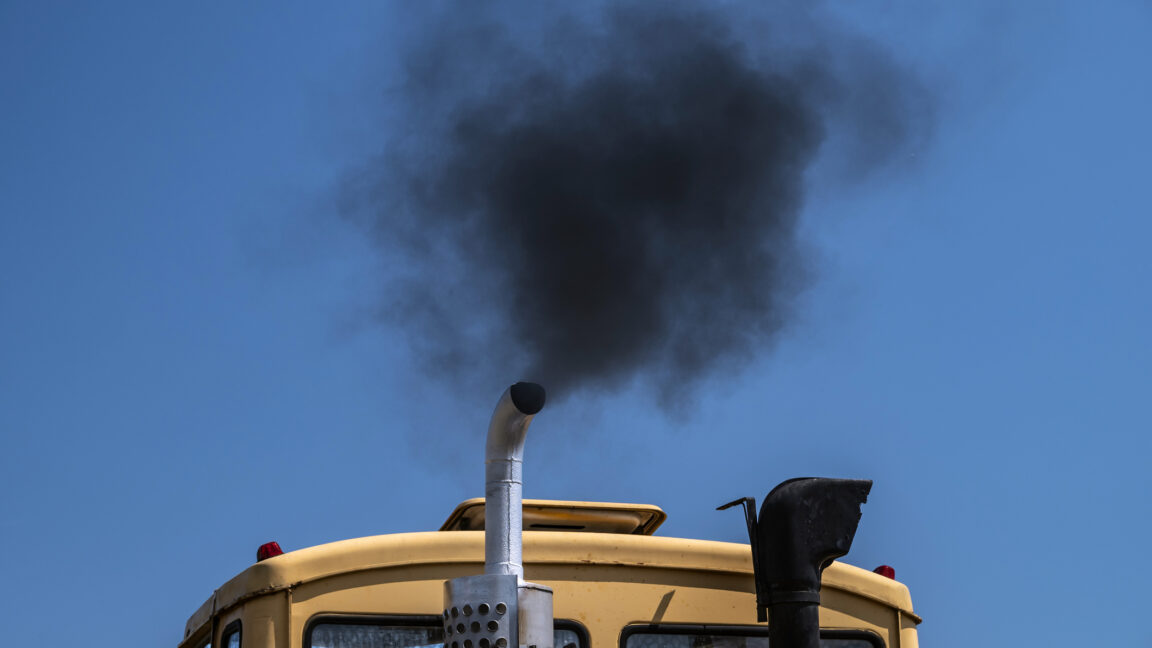
In a lawsuit filed Wednesday, the Environmental Protection Agency was accused of abandoning its mission to protect public health after repealing an "endangerment finding" that has served as the basis for federal climate change regulations for 17 years.

The lawsuit came from more than a dozen environmental and health groups, including the American Public Health Association, the American Lung Association, the Center for Biological Diversity (CBD), the Clean Air Council, the Environmental Defense Fund (EDF), the Natural Resources Defense Council (NRDC), the Sierra Club, and the Union of Concerned Scientists.

The groups have asked the US Court of Appeals for the District of Columbia Circuit to review the EPA decision, which also eliminated requirements controlling greenhouse gas emissions in new cars and trucks. Urging a return to the status quo, the groups argued that the Trump administration is anti-science and illegally moving to benefit the fossil fuel industry, despite a mountain of evidence demonstrating the deadly consequences of unchecked pollution and climate change-induced floods, droughts, wildfires, and hurricanes.

"Undercutting the ability of the federal government to tackle the largest source of climate pollution is deadly serious," Meredith Hankins, legal director for federal climate at NRDC, said in an EDF roundup of statements from plaintiffs.

The science is overwhelmingly clear, the groups argued, despite the Trump EPA attempting to muddy the waters by forming a since-disbanded working group of climate contrarians.

Trump is a longtime climate denier, as evidenced by a Euro News tracker monitoring his most controversial comments. Most recently, during a cold snap affecting much of the US, he predictably trolled environmentalists, writing on Truth Social, "could the Environmental Insurrectionists please explain—WHATEVER HAPPENED TO GLOBAL WARMING?"

The EPA's final rule summary bragged that "this is the single largest deregulatory action in US history and will save Americans over $1.3 trillion" by 2055. Supposedly, carmakers will pass on any savings from no longer having to meet emissions requirements, giving Americans more access to affordable cars by shutting down expensive emissions and EV mandates "strangling" the auto industry. Sounding nothing like an agency created to monitor pollutants, a fact sheet on the final rule emphasized that Trump's EPA "chooses consumer choice over climate change zealotry every time."

Critics quickly slammed Trump's claims that removing the endangerment finding would help the economy. Any savings from cheaper vehicles or reduced costs of charging infrastructure (as Americans ostensibly buy fewer EVs) would be offset by $1.4 trillion "in additional costs from increased fuel purchases, vehicle repair and maintenance, insurance, traffic congestion, and noise," The Guardian reported. The EPA's economic analysis also ignores public health costs, the groups suing alleged. David Pettit, an attorney at the CBD's Climate Law Institute, slammed the EPA's messaging as an attempt to sway consumers without explaining the true costs.

"Nobody but Big Oil profits from Trump trashing climate science and making cars and trucks guzzle and pollute more," Pettit said. "Consumers will pay more to fill up, and our skies and oceans will fill up with more pollution."

If the court sides with the EPA, "people everywhere will face more pollution, higher costs, and thousands of avoidable deaths," Peter Zalzal, EDF's associate vice president of clean air strategies, said.

EPA argued climate change evidence is "out of scope"

For environmentalists, the decision to sue the EPA was risky but necessary. By putting up a fight, they risk a court potentially reversing the 2009 Supreme Court ruling requiring the EPA to conduct the initial endangerment analysis and then regulate any pollution found from greenhouse gases.

Seemingly, that reversal is what the Trump administration has been angling for, hoping the case will reach the Supreme Court, which is more conservative today and perhaps less likely to read the Clean Air Act as broadly as the 2009 court.

It's worth the risk, according to William Piermattei, the managing director of the Environmental Law Program at the University of Maryland Francis King Carey School of Law. He told The New York Times that environmentalists had no choice but to file the lawsuit and act on the public's behalf.

Environmentalists "must challenge this," Piermattei said. If they didn’t, they'd be "agreeing that we should not regulate greenhouse gasses under the Clean Air Act, full stop." He suggested that "a majority of the public, does not agree with that statement at all."

Since 2010, the EPA has found that the scientific basis for concluding that "elevated concentrations of greenhouse gases in the atmosphere may reasonably be anticipated to endanger the public health and welfare of current and future US generations is robust, voluminous, and compelling." And since then, the evidence base has only grown, the groups suing said.

Trump used to seem intimidated by the "overwhelming" evidence, environmentalists have noted. During Trump's prior term, he notably left the endangerment finding in place, perhaps expecting that the evidence was irrefutable. He's now renewed that fight, arguing that the evidence should be set aside, so that courts can focus on whether Congress "must weigh in on 'major questions' that have significant political and economic implications" and serve as a check on the EPA.

In the EPA's comments addressing public concerns about the agency ignoring evidence, the agency has already argued that evidence of climate change is "out of scope" since the EPA did not repeal the basis of the finding. Instead, the EPA claims it is merely challenging its own authority to continue to regulate the auto industry for harmful emissions, suggesting that only Congress has that authority.

The Clean Air Act "does not provide EPA statutory authority to prescribe motor vehicle emission standards for the purpose of addressing global climate change concerns," the EPA said. "In the absence of such authority, the Endangerment Finding is not valid, and EPA cannot retain the regulations that resulted from it."

Whether courts will agree that evidence supporting climate change is "out of scope" could determine whether the Supreme Court's prior decision that compelled the endangerment finding is ultimately overturned. If that happens, subsequent administrations may struggle to issue a new endangerment finding to undo any potential damage. All eyes would then turn to Congress to pass a law to uphold protections.

EPA accused of abandoning its mission

By ignoring science, the EPA risks eroding public trust, according to Hana Vizcarra, a senior lawyer at the nonprofit Earthjustice, which is representing several groups in the litigation.

"With this action, EPA flips its mission on its head," Vizcarra said. "It abandons its core mandate to protect human health and the environment to boost polluting industries and attempts to rewrite the law in order to do so."

Groups appear confident that the courts will consider the science. Joanne Spalding, director of the Sierra Club's Environmental Law Program, noted that the early 2000s litigation from the Sierra Club brought about the original EPA protections. She vowed that the Sierra Club would continue fighting to keep them.

"People should not be forced to suffer for this administration's blind allegiance to the fossil fuel industry and corporate polluters," Spalding said. "This shortsighted rollback is blatantly unlawful and their efforts to force this upon the American people will fail."

Ankush Bansal, board president of Physicians for Social Responsibility, warned that courts cannot afford to ignore the evidence. The EPA's "devastating decision" goes "against the science and testimony of countless scientists, health care professionals, and public health practitioners," Bansal said. If upheld, the long-term consequences could seemingly bury courts in future legal battles.

"It will result in direct harm to the health of Americans throughout the country, particularly children, older adults, those with chronic illnesses, and other vulnerable populations, rural to urban, red and blue, of all races and incomes," Bansal said. "The increased exposure to harmful pollutants and other greenhouse gas emissions from fossil fuel production and consumption will make America sicker, not healthier, less prosperous, not more, for generations to come."

Read full article

Comments


Read the whole story
Share this story
Delete

Air Pollution Emerges As a Direct Risk Factor For Alzheimer's Disease

1 Share
Longtime Slashdot reader walterbyrd shares a report from ABC News: In a study of nearly 28 million older Americans, long-term exposure to fine particle air pollution raised the risk of Alzheimer's disease. That link held even after researchers accounted for common conditions like high blood pressure, stroke and depression. Fine particle air pollution, known as PM2.5, consists of tiny particles in the air that come from car exhaust, power plants, wildfires, and burning fuels, according to the American Lung Association. They are small enough to travel deep into the lungs and even reach the bloodstream. The research, conducted at Emory University and published in PLOS Medicine, tracked health data over nearly two decades to explore whether air pollution harms the brain indirectly by causing high blood pressure or heart disease, which, in turn, leads to dementia. However, these "middleman" conditions accounted for less than 5% of the connection between pollution and Alzheimer's, the research found. The researchers say this suggests that over 95% of the Alzheimer's risk comes from the direct impact of breathing in dirty air, likely through inflammation or damage to brain cells. "The relationship between PM2.5 and AD [Alzheimer's disease] has been shown to be pretty much linear," said Kyle Steenland, a professor in the departments of environmental health and epidemiology at the Rollins School of Public Health at Emory University, and senior author of the study. "The reason this is particularly important is that PM2.5 is known to be associated with high blood pressure, stroke and depression -- all of which are associated with AD. So, from a prevention standpoint, simply treating these diseases will not get rid of the problem. We have to address exposure to PM2.5."

Read more of this story at Slashdot.

Read the whole story
Share this story
Delete

Bayer Agrees To $7.25 Billion Proposed Settlement Over Thousands of Roundup Cancer Lawsuits

1 Share
An anonymous reader quotes a report from the Associated Press: Agrochemical maker Bayer and attorneys for cancer patients announced a proposed $7.25 billion settlement Tuesday to resolve thousands of U.S. lawsuits alleging the company failed to warn people that its popular weedkiller Roundup could cause cancer. The proposed settlement comes as the U.S. Supreme Court is preparing to hear arguments in April on Bayer's assertion that the U.S. Environmental Protection Agency's approval of Roundup without a cancer warning should invalidate claims filed in state courts. That case would not be affected by the proposed settlement. But the settlement would eliminate some of the risk from an eventual Supreme Court ruling. Patients would be assured of receiving settlement money even if the Supreme Court rules in Bayer's favor. And Bayer would be protected from potentially larger costs if the high court rules against it. Germany-based Bayer, which acquired Roundup maker Monsanto in 2018, disputes the assertion that Roundup's key ingredient, glyphosate, can cause non-Hodgkin lymphoma. But the company has warned that mounting legal costs are threatening its ability to continue selling the product in U.S. agricultural markets. "Litigation uncertainly has plagued the company for years, and this settlement gives the company a road to closure," Bayer CEO Bill Anderson said Tuesday. The proposed settlement could total up to $7.25 billion over 21 years and resolve most of the remaining U.S. lawsuits surrounding the cancer-related harms of Roundup. The report notes that more than 125,000 claims have been filed since 2015, and while many have already been settled, this deal aims to cover most outstanding and future claims tied to past exposure. Individual payouts would vary widely based on exposure type, age at diagnosis, and cancer severity. Bayer can also cancel the deal if too many plaintiffs opt out.

Read more of this story at Slashdot.

Read the whole story
Share this story
Delete

NPR's Radio Host David Greene Says Google's NotebookLM Tool Stole His Voice

1 Share
An anonymous reader quotes a report from the Washington Post: David Greene had never heard of NotebookLM, Google's buzzy artificial intelligence tool that spins up podcasts on demand, until a former colleague emailed him to ask if he'd lent it his voice. "So... I'm probably the 148th person to ask this, but did you license your voice to Google?" the former co-worker asked in a fall 2024 email. "It sounds very much like you!" Greene, a public radio veteran who has hosted NPR's "Morning Edition" and KCRW's political podcast "Left, Right & Center," looked up the tool, listening to the two virtual co-hosts -- one male and one female -- engage in light banter. "I was, like, completely freaked out," Greene said. "It's this eerie moment where you feel like you're listening to yourself." Greene felt the male voice sounded just like him -- from the cadence and intonation to the occasional "uhhs" and "likes" that Greene had worked over the years to minimize but never eliminated. He said he played it for his wife and her eyes popped. As emails and texts rolled in from friends, family members and co-workers, asking if the AI podcast voice was his, Greene became convinced he'd been ripped off. Now he's suing Google, alleging that it violated his rights by building a product that replicated his voice without payment or permission, giving users the power to make it say things Greene would never say. Google told The Washington Post in a statement on Thursday that NotebookLM's male podcast voice has nothing to do with Greene. Now a Santa Clara County, California, court may be asked to determine whether the resemblance is uncanny enough that ordinary people hearing the voice would assume it's his -- and if so, what to do about it. Greene's lawsuit cites an unnamed AI forensic firm that used its software to compare the artificial voice to Greene's. It gave a confidence rating of 53-60% that Greene's voice was used to train the model, which it considers "relatively high" confidence. "If I was David Greene I would be upset, not just because they stole my voice," but because they used it to make the podcasting equivalent of AI "slop," said Mike Pesca, host of "The Gist" podcast and a former colleague of Greene's at NPR. "They have banter, but it's very surface-level, un-insightful banter, and they're always saying, 'Yeah, that's so interesting.' It's really bad, because what do we as show hosts have except our taste in commentary and pointing our audience to that which is interesting?"

Read more of this story at Slashdot.

Read the whole story
Share this story
Delete

Could Write­Process­Memory be made faster by avoiding the intermediate buffer?

2 Shares

A little while ago, we wondered whether Write­Process­Memory was faster than shared memory for transferring data between two processes, and the conclusion is that it wasn’t. Shared memory, as its name implies, shares the memory between two processes: The two processes are accessing the same memory; there are no copies. On the other hand, the implementation of Write­Process­Memory allocates a transfer buffer, copies the data from the source to the transfer buffer, then changes memory context to the destination, and then copies the data from the transfer buffer to the destination. But could Write­Process­Memory be optimized to avoid this copy?

I mean, I guess you could do that in theory. I’m thinking, maybe create a memory descriptor list (MDL), lock and map the pages into kernel mode while in the context of the source, then change context to the destination and copy the memory to the destination. Repeat until all the memory has been copied. You don’t want to allocate a single MDL for the entire source block because the program might say that it wants to copy 100GB of memory, and if you didn’t cap the size of the transfer buffer, that would lock 100GB of RAM.

But it seems overkill and unnecessary to lock the source pages. It’s fine for them to be pageable. We’re okay with them faulting in as necessary.

I don’t know if there’s a way to map memory from one process into another except by locking it. I don’t spend a lot of time in kernel mode. But you do have to be careful that the mapping goes into the kernel address space and not the user-mode address space. Putting it in the user-mode address space would be a security vulnerability because the destination process can see the bytes on the source page that are not part of the memory being copied.¹

But really, all of this effort is pointless. We saw that the purpose of the Write­Process­Memory function is not inter-process communication (IPC) but to be a tool for debuggers. Debuggers are typically writing just a few bytes at a time, say, to patch a breakpoint instruction, and the Write­Process­Memory function actually goes out of its way to write the memory, even in the face of incompatible memory protections, though it does so in a not-thread-safe way. But that’s okay because the destination process is presumably frozen by the debugger when it calls Write­Process­Memory. A debugger is not going to patch a process while it’s actively running. The lack of atomicity means that patching a running process could result in the process seeing torn state, like a partly-patched variable or even a partly-patched instruction.

In summary, Write­Process­Memory was not intended to be used as an inter-process communication channel. Its intended client is a debugger that is using it to patch bytes in a process being debugged. The very high level of access required to call the function (PROCESS_VM_WRITE) is not suitable for an inter-process communication channel, since it basically gives the writer full pwnage over the process being written to. In the case of a debugger, you want the debugger to have complete and total control of the process being debugged. But in the case of IPC, you don’t want to give your clients that high a level of access to your process. And even if you get past that, the lack of atomicity and lack of control over the order in which the bytes become visible in the target process means that Write­Process­Memory is not suitable as an IPC mechanism anyway. There’s no point trying to make a bad idea more efficient.

¹ Or you could try it the other way: Map the destination into the source. But now you are giving the source read access to the destination bytes that share the same page as the destination buffer, even though the source may not have PROCESS_VM_READ access.

The post Could <CODE>Write­Process­Memory</CODE> be made faster by avoiding the intermediate buffer? appeared first on The Old New Thing.

Read the whole story
Share this story
Delete
Next Page of Stories